The uncomfortable truth about energy strategy in Europe
There is a gap in the energy conversation that not many want to admit, because while marketing statements continue to dominate, the system itself has already shifted toward accountability and proof.
Buildings account for around 40% of total energy consumption in the EU and 36% of emissions (EDA Europa), which makes them the single largest energy challenge across the region, yet most strategies still rely on targets, averages, and assumed performance rather than verified outcomes.
This is where the comparison with financial management becomes unavoidable, because no organisation would run its finances on assumptions, estimates, or outdated reports, and yet this is exactly how energy is still being managed.
Energy is still not managed like finances
Every organisation understands how to manage financial risk, because there are systems in place that provide continuous visibility, structured reporting, and clear accountability, which allows decisions to be made with confidence at board level.
Energy does not receive the same treatment.
Data is fragmented, delayed, and often unreliable, which means leaders are signing off on energy strategies without the equivalent of a balance sheet view, creating a situation where risk is not removed but hidden.
Energy spend may sit as a relatively small line on the P&L, but the risk associated with energy goes far beyond cost. An organisation’s sustainability position, its ability to access finance on favourable terms, and its attractiveness for investment or acquisition increasingly depend on having reliable, auditable energy data.
Without that foundation, decisions cannot be verified, performance cannot be trusted, and risk cannot be properly managed.
Around 75% of EU buildings are still classified as energy inefficient (European Commission), while renovation rates remain at roughly 1% per year, meaning the underlying problem is not being addressed at the pace required.
Efficiency gains without control
Efficiency improvements are being made, but overall demand is not falling in line with expectations, as increased usage and expanding operations continue to offset those gains.
This creates the illusion of progress without delivering real control. In financial terms, it is the equivalent of cutting costs in one area while allowing spending to rise elsewhere, resulting in no meaningful improvement.
European policy is clear in its direction, with the goal of a fully decarbonised building stock by 2050, and recent crisis-driven measures have shown that rapid reductions are possible, as seen in the 17% reduction in gas demand between 2022 and 2025 (IEEFA).
However, policy is no longer the limiting factor. Execution is.
The real risk sits on the balance sheet
Most organisations still frame energy as a sustainability issue, but energy performance now carries financial, operational, and reputational consequences that show up in due diligence, reporting, and long-term cost structures.
The risk is not missing a target. The risk is making decisions without evidence.
What needs to change
The shift required is not about ambition, but about adopting a financial mindset toward energy, where visibility is continuous, data is structured, and performance can be interrogated at any moment.
Energy needs to be managed like money, with clear baselines, ongoing tracking, and the ability to explain every deviation, because without that level of control, strategy will continue to drift away from reality.
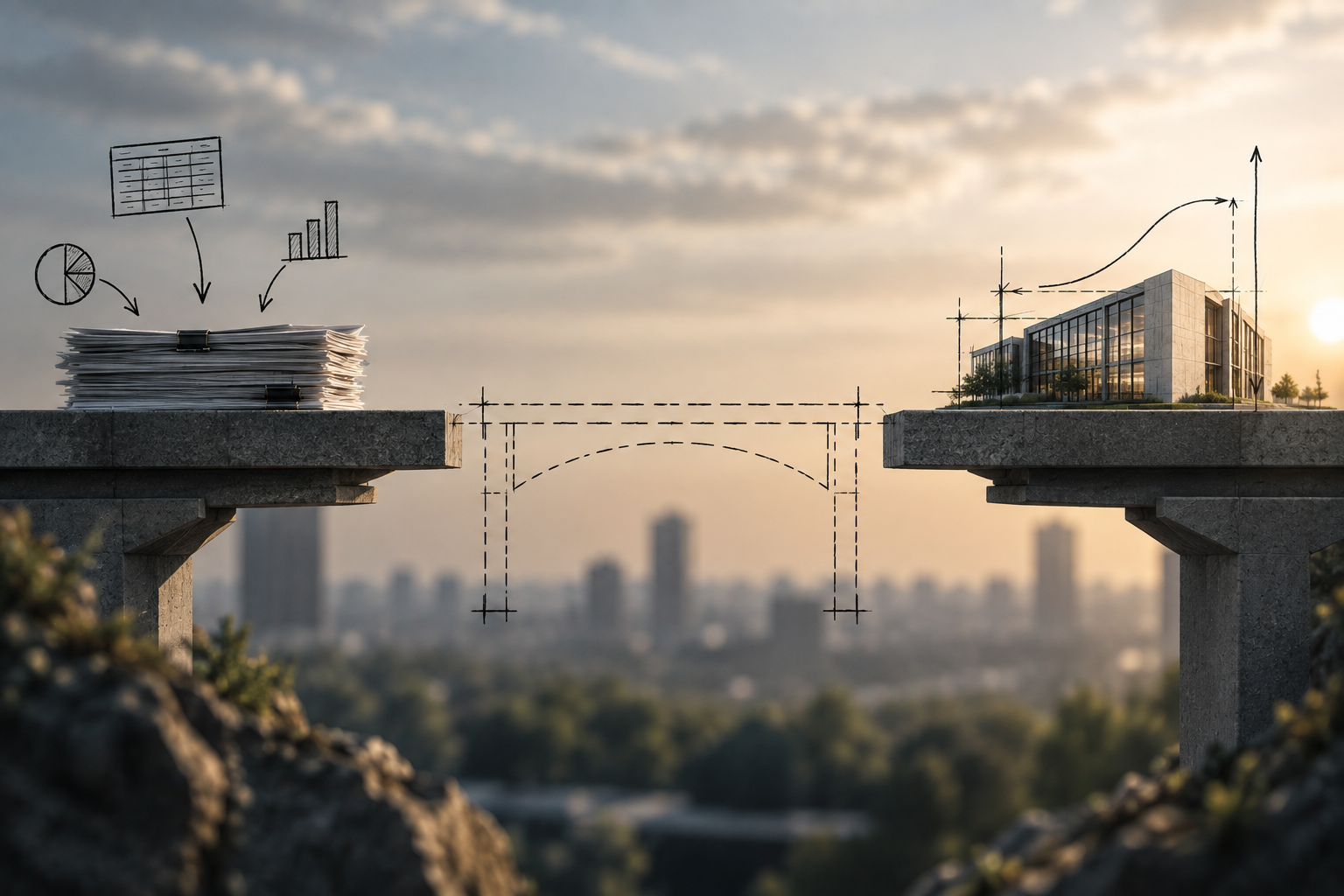
You’re making million-euro decisions based on spreadsheets
Every serious financial decision your organisation makes gets put through the wringer. Budgets are audited....

What is energy accounting?
Most organisations would never approve a major financial investment using numbers that cannot be explained,...

Why organisations keep solving the wrong energy problem
Most energy strategies start with a solution already in mind. A heat pump. More electrical...

Poor energy data is exposing organisations to financial and compliance risk
Energy data used to sit in the background, collected and reviewed occasionally, with little impact...