What is energy accounting?
Most organisations would never approve a major financial investment using numbers that cannot be explained, challenged or traced back to their source.
Yet this happens every day with energy.
Buildings are redesigned. Heat pumps are oversized. Grid upgrades are approved. Decarbonisation programmes are funded. All because assumptions gradually become accepted as fact. Nobody asks where the numbers came from. Nobody checks whether they are still true.
Energy Accounting exists to change that.
It applies the same discipline to energy that organisations already expect from finance. Every measurement has a source. Every assumption is visible. Every baseline is justified. Every forecast is tested against reality.
The result isn’t better reporting.
It’s better decisions.
Energy deserves the same discipline as finance
Financial accounting isn’t valuable because it produces reports. It’s valuable because people trust the information behind them.
Energy deserves the same discipline.
Too many major energy investments begin before organisations have properly established the problem they’re trying to solve. Decisions are made using assumptions that cannot be explained, challenged or verified.
Energy Accounting changes that.
It ensures investment decisions begin with what an organisation can prove, not what it assumes.
From reporting to accountability
For years, energy management has focused on reporting what happened. Energy Accounting asks a different question: can you explain it?
Can you show how demand was established? Can you separate what was measured from what was estimated? Can you explain why the forecast was wrong? Can you demonstrate that an investment delivered the improvement it promised?
If the answer is no, the problem isn’t the report. The problem is the information supporting the decision.
Energy Accounting creates a continuous management discipline that measures performance, challenges assumptions, explains variance and verifies outcomes. It turns energy from something organisations report into something they manage.
The next evolution of management
Every critical business function has evolved. Finance evolved into financial management. Quality evolved into quality management. Health and safety evolved into risk management.
Energy is following the same path.
It is no longer simply an operational cost or a sustainability metric. It influences investment, resilience, competitiveness and long-term business performance. Organisations now need the same discipline for energy that they already expect from finance.
That discipline is Energy Accounting.

You’re making million-euro decisions based on spreadsheets
Every serious financial decision your organisation makes gets put through the wringer. Budgets are audited....

Why organisations keep solving the wrong energy problem
Most energy strategies start with a solution already in mind. A heat pump. More electrical...

Poor energy data is exposing organisations to financial and compliance risk
Energy data used to sit in the background, collected and reviewed occasionally, with little impact...
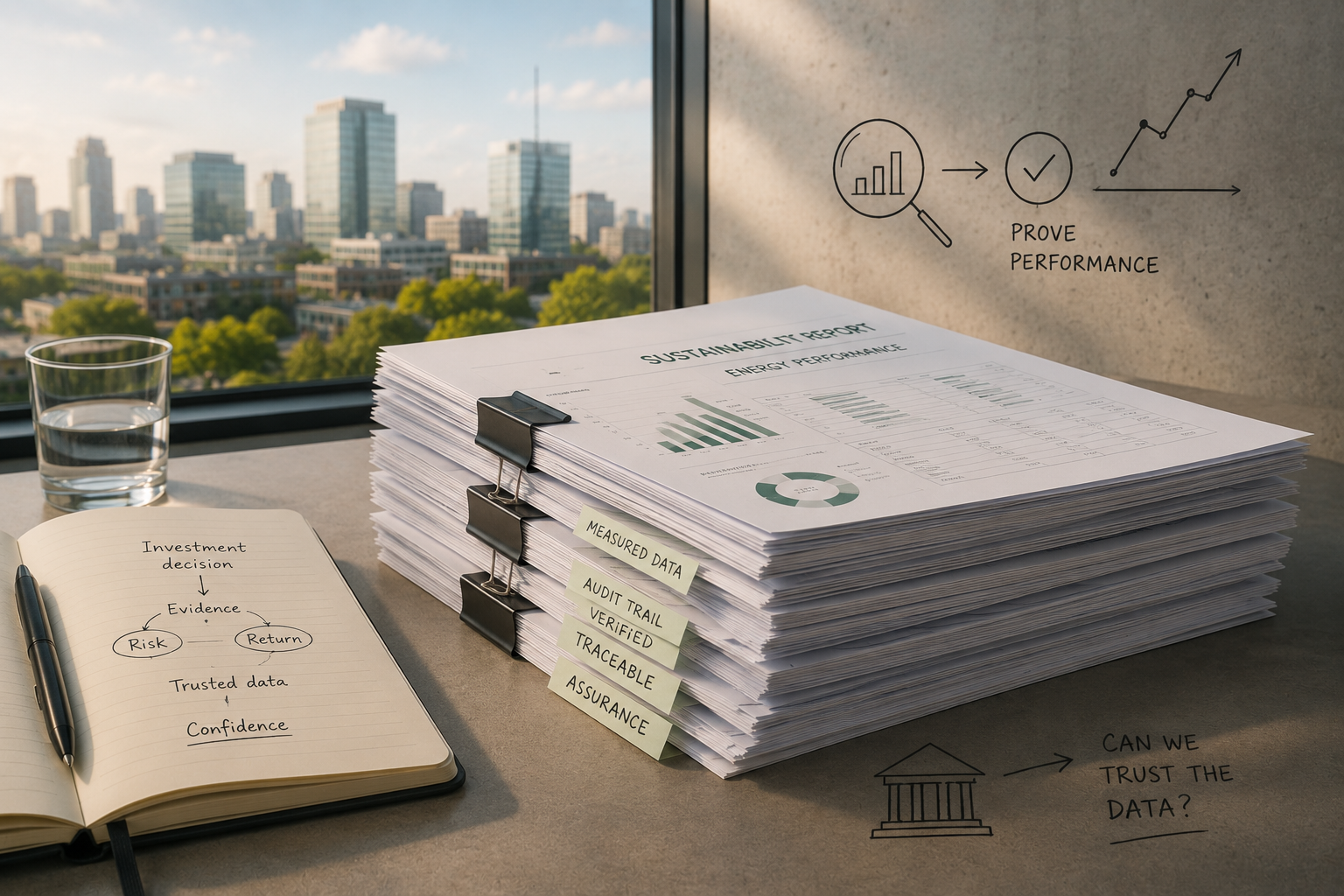
Want investment? Be prepared to prove your energy performance
There was a time when sustainability reporting was largely about demonstrating good intentions. That time...